
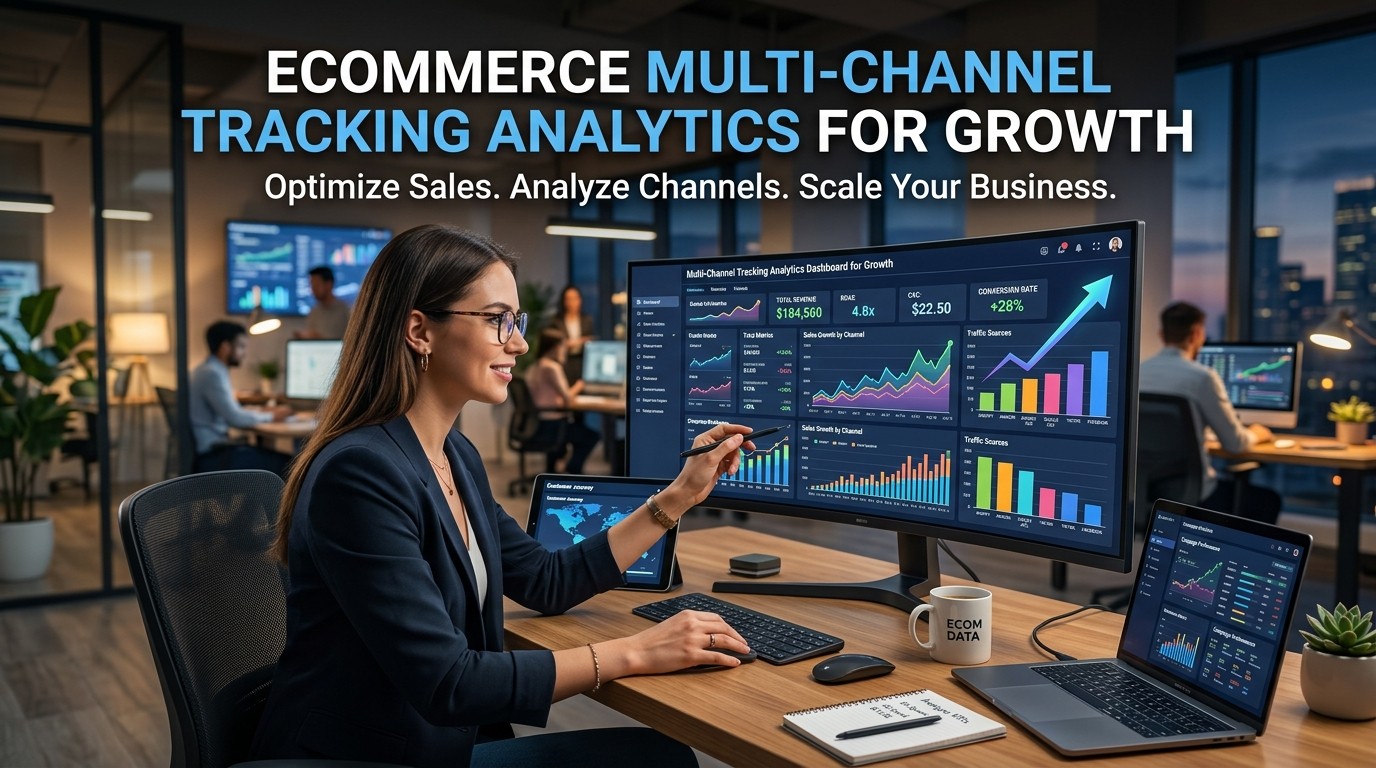
Ecommerce Multi Channel Tracking Analytics helps brands connect ads, email, search, marketplaces, and onsite behavior into one clearer growth story, so decisions happen faster.
Ecommerce Multi Channel Tracking Analytics works best when every channel is measured as part of one customer journey instead of as separate wins. That shift reduces channel arguments, improves budget discipline, and helps teams understand what actually creates demand across the funnel. It also helps the business stop overreacting to isolated metrics that look good in one dashboard but do not reflect how customers really buy.
Ecommerce Multi Channel Tracking Analytics becomes more useful when marketers accept that customers rarely convert in a straight line. They discover a product, compare options, revisit later, and buy only after several reminders. Measuring that behavior well gives marketers a realistic picture of intent rather than a shallow last-click summary. It also helps the team move faster when the next decision is already visible.
Ecommerce Multi Channel Tracking Analytics should start with consistent naming conventions, campaign IDs, and event definitions. Without those basics, reports may look complete while still missing the real story behind traffic, conversion, and repeat purchases. Clean naming sounds simple, but it is one of the strongest habits a team can build because it protects reporting from confusion later.
Ecommerce Multi Channel Tracking Analytics helps teams compare paid, organic, email, marketplace, and referral activity with more confidence. That makes it easier for managers to see where influence begins, where hesitation appears, and where conversion actually happens. It also gives the team a stronger sense of control during fast changes in the market.
Ecommerce Multi Channel Tracking Analytics also gives the team a psychological advantage. People make calmer decisions when the data feels trustworthy. Instead of debating screenshots from different dashboards, teams can focus on improving offers, creative, and customer experience. That clarity makes it easier to plan the next campaign with less hesitation.
Ecommerce Multi Channel Tracking Analytics matters because many brands still let channel data live in silos, which creates duplicate reporting and inconsistent conclusions. A stronger system brings those signals together so marketing, sales, and finance can work from the same reality. That shared view reduces conflict and keeps attention on the next best action.
Ecommerce Multi Channel Tracking Analytics changes what leaders believe is possible, because the business can finally see how small changes in media mix, timing, or messaging influence the bottom line. That insight makes strategy discussions sharper and more confident. It also makes the numbers easier to explain to non-technical stakeholders.
Ecommerce Multi Channel Tracking Analytics becomes especially valuable when a campaign performs well in one platform but weakly in another. The issue is often not the campaign itself. It may be a tracking gap, an attribution rule, or a delayed event that needs correction. That clarity helps the team avoid the wrong fix.
How the customer journey really works
Ecommerce Multi Channel Tracking Analytics works when the team treats measurement as a living process, not a one-time setup. Auditing tags, testing events, reviewing channel mappings, and confirming conversion paths regularly keeps the dashboard meaningful. It also helps the organization build confidence that the same event is being measured the same way each time.
Ecommerce Multi Channel Tracking Analytics also improves experimentation. When a landing page, audience, or offer changes, the business can identify the effect quickly and decide whether to scale, pause, or revise the test. This creates a faster learning loop and helps teams stop spending on ideas that are not actually working.
Ecommerce Multi Channel Tracking Analytics gives teams a way to separate real growth from temporary spikes. That distinction is crucial when budgets are limited and every media dollar needs to justify itself with clear contribution. It also helps people avoid mistaking seasonal noise for a durable trend.
Ecommerce Multi Channel Tracking Analytics helps connect cross-device behavior. A shopper may click on mobile, return on desktop, and complete the order later. Proper measurement connects those moments instead of treating them as unrelated sessions. That gives the team a fuller picture of how people actually move between devices.
Ecommerce Multi Channel Tracking Analytics supports better planning because teams can align campaign timing with inventory, promotional calendars, and seasonal demand instead of guessing where attention will come from next. That kind of planning is not only more efficient, it is also less stressful for everyone involved.
Ecommerce Multi Channel Tracking Analytics often delivers its biggest win by removing uncertainty. The team finally knows which channels help awareness, which channels help conversion, and which channels simply absorb spend. That knowledge turns a noisy data environment into something the business can actually act on.
Ecommerce Multi Channel Tracking Analytics makes reviews more productive because teams can discuss patterns, thresholds, and actual outcomes instead of opinions. That shortens meetings and improves accountability. It also helps the group stay focused on what the data says instead of who is loudest in the room.
Ecommerce Multi Channel Tracking Analytics also prevents over-crediting one touchpoint. When all the credit goes to the final click, awareness and nurturing channels look weak even when they carry real influence earlier in the journey. That is why a broader measurement model usually creates more honest decisions.
Building a reliable measurement stack

Ecommerce Multi Channel Tracking Analytics supports more honest growth decisions, which usually means fewer wasted experiments, faster budget reallocation, and more confidence when leadership asks what changed and why. Better evidence makes the team more decisive without making it reckless.
Ecommerce Multi Channel Tracking Analytics works best when the business agrees on definitions before campaigns launch. A conversion, an assisted sale, and a repeat purchase should each mean something specific and consistent to everyone on the team. Shared definitions create shared trust, and shared trust creates better execution.
Ecommerce Multi Channel Tracking Analytics matters most for subscription brands and high-consideration purchases, where the first visit rarely closes the deal and multiple touches are normal before revenue appears. In those cases, the customer journey is often longer than the reporting stack expects.
Ecommerce Multi Channel Tracking Analytics makes it easier to protect valuable channels that might otherwise be cut too soon. That can preserve long-term growth even if short-term reports look uneven. The goal is not to protect every channel, but to avoid removing something that is quietly helping.
Ecommerce Multi Channel Tracking Analytics becomes easier to use for smaller teams when they rely on Small Business Digital Marketing Tools to keep operations lean. They do not need a huge analytics department to gain real insight; they need clear definitions and a practical workflow.
Ecommerce Multi Channel Tracking Analytics fits nicely with Digital Marketing Strategy Planning Tool because planning in advance reduces waste and makes it easier to connect goals with measurable actions later. When strategy and reporting are linked, the team wastes less time arguing about what should have happened.
Ecommerce Multi Channel Tracking Analytics can support sales alignment when brands pair the strategy with Tracking Tools For Sales so sales teams can see which efforts create pipeline, repeat orders, or high-value customer behavior instead of only low-quality traffic. That alignment makes the handoff between marketing and sales much cleaner.
Ecommerce Multi Channel Tracking Analytics is strongest when the setup is built for progress rather than perfection. Each reporting cycle should reveal one or two improvements that the team can act on immediately. Small gains become meaningful when they are repeated consistently.
Data quality, reporting, and team trust
Ecommerce Multi Channel Tracking Analytics becomes trusted more quickly as the data improves. When trust grows, the whole organization becomes more willing to use analytics during planning, performance reviews, and budget discussions. That trust also lowers resistance when new campaign ideas are tested.
Ecommerce Multi Channel Tracking Analytics is why Ecommerce Data Accuracy Tracking Analytics matters as a discipline: it keeps the business focused on trustworthy inputs, not just polished dashboards, and it protects decision-making from bad assumptions. If the inputs are weak, the strategy usually becomes weak too.
Ecommerce Multi Channel Tracking Analytics cannot create insight if the measurement layer is weak. The goal is not only to record activity, but to understand what that activity means. Good reporting should feel like a map, not a maze.
Ecommerce Multi Channel Tracking Analytics reflects the fact that channel overlap is normal now, and attribution must mirror reality rather than a simplified story. One user may encounter many touchpoints before a sale appears. The more accurate the system, the easier it is to explain why revenue happened.
Ecommerce Multi Channel Tracking Analytics improves the conversation because teams can discuss what helped awareness, what improved consideration, and what finally pushed the customer to buy. That makes marketing feel less like guesswork and more like an intentional process.
Ecommerce Multi Channel Tracking Analytics also shapes content strategy. If a channel assists often but closes rarely, the team may need stronger follow-up messaging, more persuasive offers, or better retargeting. That kind of response is far more useful than simply spending more money.
Ecommerce Multi Channel Tracking Analytics can guide merchandising decisions too. If certain categories convert only after multiple visits, the business may choose to create richer comparison content or more helpful reminders. In other words, the data should influence the customer experience, not just the media plan.
Ecommerce Multi Channel Tracking Analytics is a growth asset because it shortens the distance between insight and action. The faster the team sees the problem, the faster it can fix the problem. That speed often matters just as much as the size of the budget.
Optimization, forecasting, and budget control
Ecommerce Multi Channel Tracking Analytics should feel like a map, not a maze. It should reduce confusion, show direction, and help leaders understand the next best move with minimal friction. If the reporting layer creates more work than clarity, the system needs simplification.
Ecommerce Multi Channel Tracking Analytics matters particularly when budgets are tight. Every decision carries more weight, so marketers need dependable evidence before increasing spend or changing strategy. A small improvement in clarity can save a large amount of wasted budget.
Ecommerce Multi Channel Tracking Analytics stops optimization from becoming guesswork when the customer journey is visible. Then the team can choose the right interventions at the right time. That means a better offer, a better message, or a better retargeting sequence can be introduced with confidence.
Ecommerce Multi Channel Tracking Analytics helps the organization learn which combinations of channels create momentum. Some touchpoints start interest, others build confidence, and a few close the sale more consistently than others. The value is not in isolating one winner, but in understanding the mix.
Ecommerce Multi Channel Tracking Analytics leads to smarter creative planning because the team can design messages for each stage rather than repeating the same pitch everywhere. That usually creates stronger relevance and better audience response.
Ecommerce Multi Channel Tracking Analytics creates a system that feels more human and less mechanical. People see ads, content, and emails that match their stage of awareness instead of being treated as strangers. When that happens, conversion usually improves because the customer feels understood, not interrupted.
Ecommerce Multi Channel Tracking Analytics often reveals its value during a campaign review. The numbers may show that one channel helped awareness while another carried the final conversion, and the story suddenly makes sense. That moment is powerful because it turns abstract metrics into a clear operating model the whole company can follow.
Ecommerce Multi Channel Tracking Analytics turns abstract metrics into a clear operating model the whole company can follow. That is why it becomes more useful over time, not less. As the business grows, the need for clarity grows with it.
Scaling with confidence

Ecommerce Multi Channel Tracking Analytics becomes more important as the business matures. Scaling without measurement discipline usually creates confusion, while scaling with strong reporting creates confidence. That confidence helps leaders invest more carefully and act with better timing.
Ecommerce Multi Channel Tracking Analytics also helps the company avoid panic. A dip in one channel does not automatically mean the strategy failed if other channels are still supporting the journey. The goal is to interpret the whole picture before making major changes.
Ecommerce Multi Channel Tracking Analytics becomes a source of stability when used well. It tells the team what to keep, what to test, and what to remove without emotional overreaction. That stability matters because growth is easier to manage when the numbers are understood.
Ecommerce Multi Channel Tracking Analytics is the real purpose of modern ecommerce measurement: not just to report numbers, but to make growth easier to understand, easier to defend, and easier to repeat. When the system reaches that level, it stops being a reporting burden and starts becoming a strategic advantage.
Channel visibility at a glance
| Area | What to watch | Why it matters |
|---|---|---|
| Acquisition | Source, campaign, and audience | Shows where demand starts |
| Conversion | Landing page, product view, checkout | Reveals where customers hesitate |
| Retention | Repeat visits, email returns, subscriptions | Shows whether the channel mix builds loyalty |
| Attribution | Assisted conversions, path length, multi-touch credit | Prevents over-crediting the last click |
Implementation checklist

Start by naming every revenue channel and every conversion event in one shared document. That baseline reduces confusion later and gives the team a simple reference point during audits, launches, and reporting reviews. It also prevents different departments from inventing separate definitions for the same outcome, which is one of the fastest ways to damage trust in reporting.
Next, assign a single owner to validation. Someone must check tags, confirm test orders, review platform discrepancies, and make sure reporting changes do not silently break the measurement layer. Ownership matters because visibility without accountability can look sophisticated while still failing at the exact moment the business needs reliable numbers.
Then define the business questions before building dashboards. The dashboard should answer what drove traffic, what supported purchase, what increased repeat buying, and where the customer journey slowed down. When the question comes first, the chart design becomes much easier and the report becomes useful instead of decorative.
Review the system on a predictable schedule. Weekly checks catch urgent problems, monthly audits keep standards clean, and quarterly reviews help the company decide whether the setup still matches the current growth model. This rhythm keeps measurement from becoming a one-time project that slowly drifts away from operational reality.
Use test orders, internal clicks, and controlled campaigns to verify that the data matches what people actually see on the site. Small checks like these are often the quickest way to expose broken attribution, missing pixels, or inconsistent event firing before they affect bigger decisions.
Document everything that matters, including channel naming rules, conversion definitions, and the meaning of each dashboard metric. Good documentation saves time during onboarding and makes it easier for new team members to understand why the reporting system was built the way it was.
Common mistakes to avoid
A common mistake is to judge the system only by top-line revenue. Revenue matters, but it can hide channel mix problems, repeat purchase issues, or attribution drift that will create headaches later. A better review asks whether the current setup is accurate, explainable, and useful across teams. If the answer is yes, the stack is helping. If the answer is no, even a strong sales month may be hiding a weak measurement foundation that needs repair before the next campaign cycle.
Another mistake is to let reporting become someone else’s job. The strongest teams make measurement part of everyday marketing, merchandising, and leadership work. That means discussing the data when choosing offers, shaping promotions, planning inventory, and reviewing results after launch. When analytics is woven into the normal rhythm, it stops feeling like extra work and starts acting like a growth habit that keeps the business moving in a more informed direction.
Conclusion
Ecommerce Multi Channel Tracking Analytics helps ecommerce teams move from fragmented reporting to confident growth decisions. When ads, email, search, marketplace activity, and onsite behavior are measured in one framework, the business can see how customers really buy instead of guessing from isolated dashboards. That clarity improves planning, protects budget, and supports stronger collaboration across marketing, sales, and finance. The best systems are not the most complicated ones; they are the ones teams can trust and use every week. If the data is accurate, the definitions are consistent, and the review rhythm is steady, it becomes a practical engine for scaling revenue with less waste and more certainty.
Frequently Asked Questions (FAQ)
What does multi-channel tracking actually measure?
It measures how different touchpoints contribute to awareness, consideration, conversion, and repeat buying so the team can understand the full customer journey. It also helps identify which paths appear most often before revenue is created.
Why do ecommerce teams lose accuracy across platforms?
Accuracy usually drops because tags are inconsistent, events are defined differently, or platforms count conversions in different ways. Teams also lose clarity when campaign naming and source rules are not standardized across tools.
Do small stores need advanced attribution?
Yes. Smaller stores benefit quickly because they need to protect limited budget and understand which campaigns create real revenue. Even a lean analytics setup can reveal waste and guide better spending decisions.
Which channels should be tracked first?
Start with the highest-traffic and highest-spend channels, then add the rest once the core journey is visible and reliable. The first priority is usually the paths that affect most orders or most revenue.
How often should tracking be audited?
Audit it monthly at minimum, and more often when campaigns, site changes, or new platforms are introduced. Frequent checks catch errors early and prevent small problems from turning into reporting gaps.
What breaks reporting the most often?
The most common problems are missing tags, duplicate events, broken campaign names, and mismatched conversion definitions. In many teams, the real issue is not the tool but the lack of a shared process.
Can dashboards improve team decisions?
Yes, when the dashboard is built around shared definitions and clear action steps rather than vanity metrics. A good dashboard should help people decide what to do next, not just admire the numbers.
How do I know if attribution is trustworthy?
Trust usually comes from consistency. If the same event is measured the same way across tools, and results match the business reality, confidence grows. Testing with real orders and controlled traffic makes the system stronger.
Is one reporting tool enough for growth?
Not always. One tool may be enough for simple operations, but growing teams often need a stack that covers attribution, behavior, and reporting together. The best choice depends on channel mix, team size, and reporting needs.
What should leaders look for in the data?
Leaders should look for clear channel contribution, stable conversion trends, and evidence that the numbers match observed customer behavior. They should also ask whether the data is helping the team act faster and with more confidence.


