
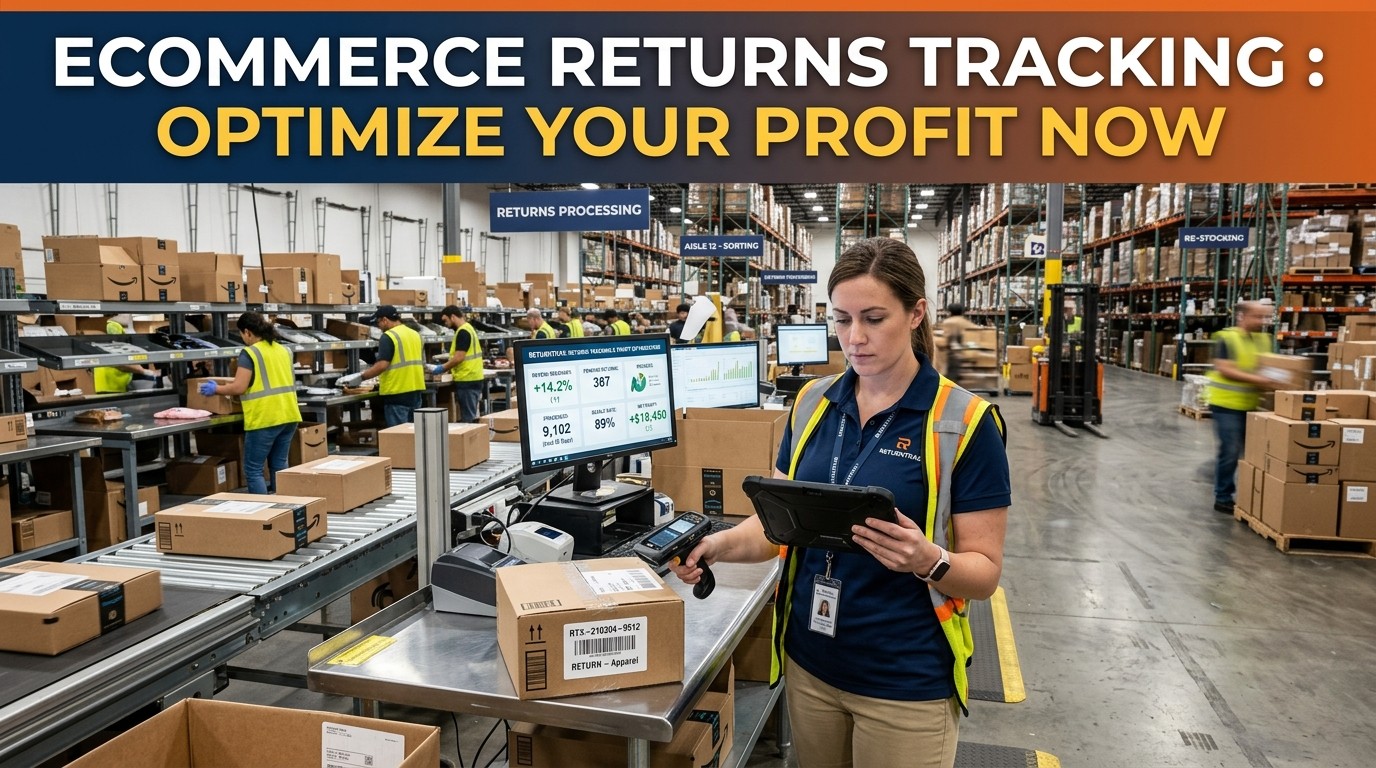
Ecommerce Returns Tracking helps sellers cut loss, reveal product and logistics problems early, and turn return data into stronger margins, better trust, and smarter decisions.
Ecommerce Returns Tracking is one of the fastest ways to understand where profit is leaking in an online store. Returns are not only an operations issue; they are a signal that something in the product, promise, fulfillment, or customer experience needs attention. When the process is measured properly, the business stops guessing and starts learning from real buying behavior.
Ecommerce Returns Tracking also gives leadership a clearer view of customer expectations. A rising return rate may point to poor product descriptions, sizing confusion, damaged delivery, weak packaging, or a mismatch between marketing claims and actual use. When the return journey is visible, teams can fix the root cause instead of only handling the refund.
Ecommerce Returns Tracking becomes even more powerful when it is linked to demand patterns, product categories, and customer segments. That makes it easier to see which items create repeat problems and which customer groups need better education before purchase. The result is a more profitable store with fewer surprises.
Ecommerce Returns Tracking is not about making returns disappear completely. It is about making them measurable, manageable, and financially useful. Stores that treat returns as structured feedback gain an advantage because they can improve the shopping experience while protecting margin at the same time.
Why returns happen and what they reveal
Ecommerce Returns Tracking works best when teams understand that every return has a reason, even when that reason is not obvious at first glance. A customer may say a product “did not fit” or “was not as expected,” but the deeper issue may be a weak image set, unclear specs, or poor packaging presentation. That is why analysis matters.
Ecommerce Returns Tracking helps uncover pattern-based problems that individual support agents may not notice. One return is an event. Fifty returns from the same SKU are a business signal. When those patterns are grouped by reason, channel, and product type, the store gains a practical picture of what needs to change first.
Ecommerce Returns Tracking also shows the cost of expectation gaps. If customers believe a product will perform one way and it performs another, refunds rise and future trust falls. That gap can often be reduced through better copy, clearer photography, realistic comparison points, and more honest pre-purchase guidance.
Ecommerce Returns Tracking is especially useful for stores that sell apparel, electronics, accessories, or home goods, because these categories often carry higher uncertainty. The more complex the product promise, the more valuable it is to see why buyers send items back. That insight protects both revenue and reputation.
Ecommerce Returns Tracking should also identify return timing. A return filed immediately after delivery may signal damage or misrepresentation, while a return filed later may point to product quality or customer remorse. The timing difference matters because it tells the team where to inspect the customer journey.
The metrics that matter most

Ecommerce Returns Tracking should begin with a small set of practical numbers that explain both volume and quality. The goal is not to drown teams in dashboards, but to show which parts of the business create avoidable loss and which parts protect profit. Clear metrics create faster decisions.
Ecommerce Returns Tracking becomes more useful when it is built around the right operational measures rather than vanity stats. Leaders need to know how often items are returned, what those returns cost, how long processing takes, which products lead to repeat refunds, and which customers are most likely to send items back.
Ecommerce Returns Tracking should be anchored in Ecommerce Metrics To Track that connect directly to margin and customer satisfaction. Some stores measure return rate by SKU, some by category, and some by fulfillment source. The most effective stores usually monitor all three because each one tells a different part of the story.
Ecommerce Returns Tracking becomes much easier to interpret when teams map metrics to action. A high return rate for one item may require a product fix, while a slow processing time may require staffing or workflow changes. A useful dashboard does not just display the problem; it suggests what kind of response is needed.
Ecommerce Returns Tracking can be organized around a simple operational set of indicators:
| Metric | What it tells you | Why it matters |
|---|---|---|
| Return rate | How often customers send items back | Reveals product or promise problems |
| Return reason mix | Why items are being returned | Shows root causes |
| Refund processing time | Speed of resolution | Affects customer trust |
| Restocking rate | How much inventory is recoverable | Protects margin |
| Exchange rate | How often customers choose a replacement | Improves revenue retention |
| Return cost per order | Total cost of a return | Shows profit leakage |
| Repeat return rate | Whether the same customer returns often | Helps segment risk |
| Damage-on-arrival rate | How often products arrive broken | Points to packing or carrier issues |
Ecommerce Returns Tracking should use these metrics together, not separately. A low return rate may still hide expensive damage if a few products are causing large losses. A high exchange rate may look bad at first glance, but it can actually be healthier than full refunds because it keeps revenue in the business.
Building the return workflow
Ecommerce Returns Tracking is strongest when the workflow is simple enough for support teams to follow without hesitation. Customers should know where to start, what information to provide, and how long each step will take. When the process is clear, friction drops and support volume becomes easier to manage.
Ecommerce Returns Tracking should begin at the moment the customer requests help, not only when the product comes back to the warehouse. The earlier the issue is tagged, the sooner the team can classify the reason, route the case, and prevent the same mistake from affecting more orders.
Ecommerce Returns Tracking improves when every return passes through the same stages: request, verification, authorization, shipping, inspection, resolution, and analysis. This structure gives the store a clean audit trail and makes it easier to see where delays happen. It also gives customers a more predictable experience.
Ecommerce Returns Tracking can be simplified through a decision tree that separates common cases from unusual ones. For example, damaged item, wrong size, wrong item, late delivery, and change of mind can each follow a distinct path. That reduces support confusion and makes reporting more accurate.
Ecommerce Returns Tracking becomes operationally efficient when the workflow is tied to rules. Approved reasons, return windows, restocking eligibility, and exchange options should all be consistent. The more standardized the workflow, the easier it is to measure results and improve the process over time.
Policies, expectations, and customer psychology
Ecommerce Returns Tracking is not just about process; it is also about psychology. Customers feel safer when they know returns are easy, transparent, and fair. A generous policy can raise conversion, but only when the rules are easy to understand and the business can absorb the cost responsibly.
Ecommerce Returns Tracking becomes more effective when policy language matches real customer behavior. If a return policy is too rigid, customers may avoid buying. If it is too loose, abuse and margin loss can rise. The best policies balance reassurance with control, giving customers confidence without inviting unnecessary losses.
Ecommerce Returns Tracking should be supported by product pages that set expectations early. Return volume often falls when customers know exactly what they are buying. Accurate images, fit notes, dimensions, compatibility details, and use-case examples all reduce surprises. Preventing confusion is cheaper than processing a refund.
Ecommerce Returns Tracking also benefits from post-purchase communication. Confirmation emails, delivery updates, setup tips, and care instructions can reduce early returns because they help customers get value from the product faster. Small reassurance messages can prevent unnecessary dissatisfaction.
Ecommerce Returns Tracking works best when support tone feels human. Customers are more patient when they feel respected during a return. A polite and clear process often saves future revenue, because a customer who had a fair return experience may still buy again later.
The role of technology in reducing losses
Ecommerce Returns Tracking becomes far more useful when it is supported by systems that log, segment, and automate the right tasks. Manual spreadsheets can help at the beginning, but they quickly become weak when order volume rises. Technology gives the team speed, consistency, and visibility.
Ecommerce Returns Tracking can be connected to CRM and Automation Tech so every return is linked back to customer history, purchase behavior, and support interaction. That creates a richer picture of whether a return is a one-time issue or part of a broader pattern. It also makes it easier to personalize follow-up.
Ecommerce Returns Tracking should also work alongside a Marketing Automation Platform so the business can follow up with replacement offers, education sequences, review requests, or recovery campaigns. When the right automation is in place, returns no longer end the customer relationship. They become a moment for smarter re-engagement.
Ecommerce Returns Tracking becomes more precise when systems tag return reasons consistently. Automation can route the case, assign the correct team, and trigger the next step without delay. That lowers support load and reduces human error, especially in stores handling a large number of orders.
Ecommerce Returns Tracking is more valuable when it connects with Ecommerce Conversion Tracking, because then the business can compare buyers who returned versus buyers who kept the order. That comparison shows which channels, offers, and product pages create high-quality purchases instead of unstable ones.
How to read return data by segment

Ecommerce Returns Tracking becomes much more informative when data is segmented by category, channel, geography, product version, and customer type. A single blended return rate can hide important differences. For example, one product line may be healthy while another line quietly drains profit.
Ecommerce Returns Tracking should look at first-time buyers separately from repeat customers. New buyers often return more because they do not yet trust the brand or fully understand the product. Repeat customers may return less often, but when they do, the issue may be more serious because expectations are already established.
Ecommerce Returns Tracking also needs a channel lens. Customers who arrive from one traffic source may return more often if the ads overpromise or the landing page is misleading. This is one reason return analysis should never sit in isolation. It should be read alongside campaign and funnel data.
Ecommerce Returns Tracking should also break down product bundles, accessories, and high-ticket items separately. Return behavior often changes with order value, complexity, and delivery risk. A product that looks profitable on paper may not be profitable after returns, shipping, and reprocessing are included.
Ecommerce Returns Tracking becomes a forecasting tool when teams compare return trends over time. If one category is getting worse month after month, the problem is probably structural. If a problem appears only during a holiday campaign or a new supplier batch, the fix may be more specific and faster.
Practical ways to reduce returns before they happen
Ecommerce Returns Tracking should be used not only to react to returns, but to prevent them. The most profitable return is the one that never happens because the customer understood the product before checkout. Prevention starts with better content, clearer product detail, and realistic expectations.
Ecommerce Returns Tracking can guide page improvements by revealing where confusion starts. If a certain item has a high return rate due to size or compatibility, the product page should answer those questions more directly. The faster customers can self-qualify, the fewer costly returns the store will face.
Ecommerce Returns Tracking also supports better merchandising. Some products need comparison charts, usage examples, installation instructions, or short demo clips. Other products may need more honest copy about what they are not. Clarity may reduce impulse purchases a little, but it usually improves long-term profit.
Ecommerce Returns Tracking should influence packaging and unboxing as well. A product that is easy to open, protect, and inspect usually creates less frustration. When the delivery experience feels careful and deliberate, the customer is less likely to interpret minor issues as a sign of poor quality.
Ecommerce Returns Tracking can also support customer education after purchase. A short onboarding email, setup guide, or care checklist can lower returns caused by confusion or misuse. That simple step often improves satisfaction while protecting revenue and lowering unnecessary service volume.
Turning return insight into profit protection
Ecommerce Returns Tracking becomes financially powerful when it is tied to margin analysis. A return is not only a refund. It may also include shipping, labor, repacking, restocking, damage, disposal, and lost future value. Seeing the full cost helps the business make smarter decisions about pricing and assortment.
Ecommerce Returns Tracking should help identify products that create hidden loss even when they sell well. High-volume items can still hurt profit if too many are returned or damaged. That is why sales alone are not a reliable success measure. True performance comes from net contribution after return costs.
Ecommerce Returns Tracking also helps decide where to invest in improvement. If one category generates a large share of avoidable refunds, it may deserve better content, stronger packaging, or supplier renegotiation. Small fixes in the right place can protect much more money than broad, unfocused optimization.
Ecommerce Returns Tracking can also improve inventory planning. If return data shows that certain sizes, colors, or bundles move back into stock slowly, forecasting becomes more realistic. Better forecasting reduces over-ordering, storage waste, and pricing pressure, all of which support profit.
Ecommerce Returns Tracking should be reviewed alongside gross margin, net revenue, and customer lifetime value. A product with a lower margin may still be worth keeping if it brings loyal customers. A product with a strong margin may still need fixing if returns wipe out the gain.
A dashboard structure that actually helps teams

Ecommerce Returns Tracking works best when the reporting structure is easy to scan. A dashboard should show the most urgent trends first, then allow deeper filtering for managers who need detail. The visual design should make it obvious where the pain points are and what is changing over time.
Ecommerce Returns Tracking dashboards should include volume, rate, reason categories, time to resolution, cost per return, and product-level trends. Those views give a practical overview without clutter. The best dashboards help a manager answer three questions quickly: what changed, why it changed, and what action should happen next.
Ecommerce Returns Tracking can also be layered by team. Operations may need warehouse-level insight, support may need ticket-level visibility, and finance may need margin impact. A good dashboard gives each group the same truth in a different format so meetings become more productive and less repetitive.
Ecommerce Returns Tracking becomes more actionable when alerts are built into the dashboard. If a return reason suddenly spikes or one SKU crosses a threshold, the system should surface it immediately. Timely alerts are useful only when they are specific enough to lead to a decision.
Ecommerce Returns Tracking dashboards should never be static. As the business grows, the dashboard should evolve to show new product lines, new regions, and new fulfillment channels. A dashboard that stays fixed while the business changes will slowly lose its usefulness.
Common mistakes that reduce return profitability
Ecommerce Returns Tracking often fails when teams only look at aggregate numbers. A store may know the overall return rate, but not which category, supplier, or traffic source is responsible. That leads to vague action instead of precise improvement. Granularity is where real value begins.
Ecommerce Returns Tracking can also become misleading when return reasons are not standardized. If one customer says “too small,” another says “poor fit,” and a third says “not as described,” the reporting may split one issue into three categories. The analysis becomes weaker, and the fix becomes harder to identify.
Ecommerce Returns Tracking should avoid overreaction to short-term spikes. A holiday surge or a carrier disruption may temporarily distort the numbers. Before making a major decision, teams should confirm whether the issue is isolated or part of a lasting trend. That prevents expensive mistakes.
Ecommerce Returns Tracking also suffers when support and operations do not share the same data. If one team sees complaints but another team only sees refunds, the company misses the full story. Shared visibility creates faster root-cause analysis and better cross-functional ownership.
Ecommerce Returns Tracking is strongest when it leads to change. A report that sits unread is just storage. A report that prompts better product pages, better suppliers, better packaging, and better service becomes a profit system. That is where return analytics become strategically valuable.
Conclusion
Ecommerce Returns Tracking gives online stores a practical way to protect margin, improve customer satisfaction, and reduce repeat mistakes. When the data is organized clearly, leaders can see which products, channels, and processes create avoidable loss. That insight helps teams fix the real problem instead of only refunding it away. The strongest businesses use return data to improve product content, packaging, fulfillment, and support flow at the same time. Over time, that creates a healthier buying experience, lower operational waste, and more stable profit. A well-managed return system is not a burden. It is a competitive advantage that keeps teaching the business how to sell more intelligently.
FAQs
1. What is Ecommerce Returns Tracking?
It is the process of measuring, analyzing, and improving the reasons customers send products back.
2. Why does return tracking matter for profit?
Because returns affect refunds, shipping, labor, restocking, and future customer behavior.
3. Which products usually need the most attention?
Apparel, electronics, accessories, and home goods often need closer monitoring because expectation gaps are common.
4. What should a returns dashboard show?
Return rate, reason mix, cost per return, processing time, exchange rate, and product-level trends.
5. How can returns be reduced before they happen?
Use clearer product pages, better images, more precise specs, setup guidance, and realistic messaging.
6. Is a high return rate always bad?
Not always. The context matters. Some categories naturally return more, and exchanges can be healthier than refunds.
7. How does technology help with returns?
It improves tagging, routing, reporting, automation, and follow-up, which saves time and reduces errors.
8. Should returns be reviewed daily?
Active stores should check them often, especially when product launches, campaigns, or shipping issues create spikes.
9. Can returns data improve marketing?
Yes. It can reveal which traffic sources attract mismatched buyers or misleading expectations.
10. What is the best long-term outcome?
A lower-cost return process, fewer avoidable refunds, and a better customer experience that supports repeat sales.


