
Ecommerce Behavior Insights Tracking helps teams see what shoppers do, why they pause, and where revenue leaks happen, so every marketing and product decision becomes clearer, calmer, and more profitable.
This behavioral system is valuable because online stores do not grow on traffic alone; they grow when every click, scroll, add-to-cart, and return visit is understood in context. When teams only watch revenue totals, they often miss the signals that explain why customers hesitate, convert, or disappear. Ecommerce Behavior Insights Tracking gives that missing context by connecting actions to outcomes.
Ecommerce Behavior Insights Tracking also helps remove emotion from decisions. It is easy for a team to blame the wrong page, the wrong ad, or the wrong campaign when sales dip. With a behavioral view, the team can see whether shoppers are bouncing early, comparing products, abandoning checkout, or returning later through another channel. That clarity reduces friction inside the organization and makes it easier to align people around facts instead of opinions.
Ecommerce Behavior Insights Tracking is especially important now because customer journeys are longer and more fragmented. A shopper may discover a product on social media, revisit through search, compare it on mobile, and buy later on desktop. If the toolkit cannot connect those steps, the store appears random. If it can, the business begins to understand the real path to purchase rather than a simplified version of it.
The toolkit mindset
A good toolkit is not just software. Ecommerce Behavior Insights Tracking works best when the business treats it as a repeatable operating system for decision-making. That means the team does not look at the numbers once a month and move on. It means the team defines what matters, tracks it consistently, and uses it to improve product pages, offers, media spend, and customer experience.
Ecommerce Behavior Insights Tracking should help the team answer practical questions. Which pages keep attention? Which product groups get compared but not bought? Which traffic sources bring curious visitors instead of buyers? Which sessions turn into high-value carts? When the toolkit answers those questions clearly, the team starts making better choices with less debate and less guesswork.
Ecommerce Behavior Insights Tracking also supports a healthier organizational culture. Teams often feel pressure to show results, and that pressure can create shallow reporting. A strong behavior toolkit pushes the business toward depth. Instead of celebrating traffic spikes alone, the team learns to ask whether the spike produced meaningful engagement, qualified carts, and repeat behavior.
What should be tracked first
Ecommerce Behavior Insights Tracking should begin with the most visible friction points in the journey. Product views, search usage, category clicks, cart adds, checkout initiation, and purchase completion usually reveal the first layer of truth. Once the basic funnel is visible, the business can dig deeper into time on page, scroll depth, device behavior, and repeat visits.
Ecommerce Behavior Insights Tracking becomes more useful when it maps those actions to intent. A visitor who lands on a category page and leaves quickly is behaving differently from one who reads reviews, compares variants, and returns later. The toolkit should not treat both visitors as equal just because they both counted as sessions. Behavioral nuance is where the strategy lives.
Ecommerce Behavior Insights Tracking also needs to show where time is being spent without progress. A long time on a page can mean interest or confusion. A high number of clicks can mean engagement or frustration. Good tracking does not assume meaning; it reveals patterns and lets the team investigate the cause. That is the difference between reporting and insight.
Core metrics that actually matter
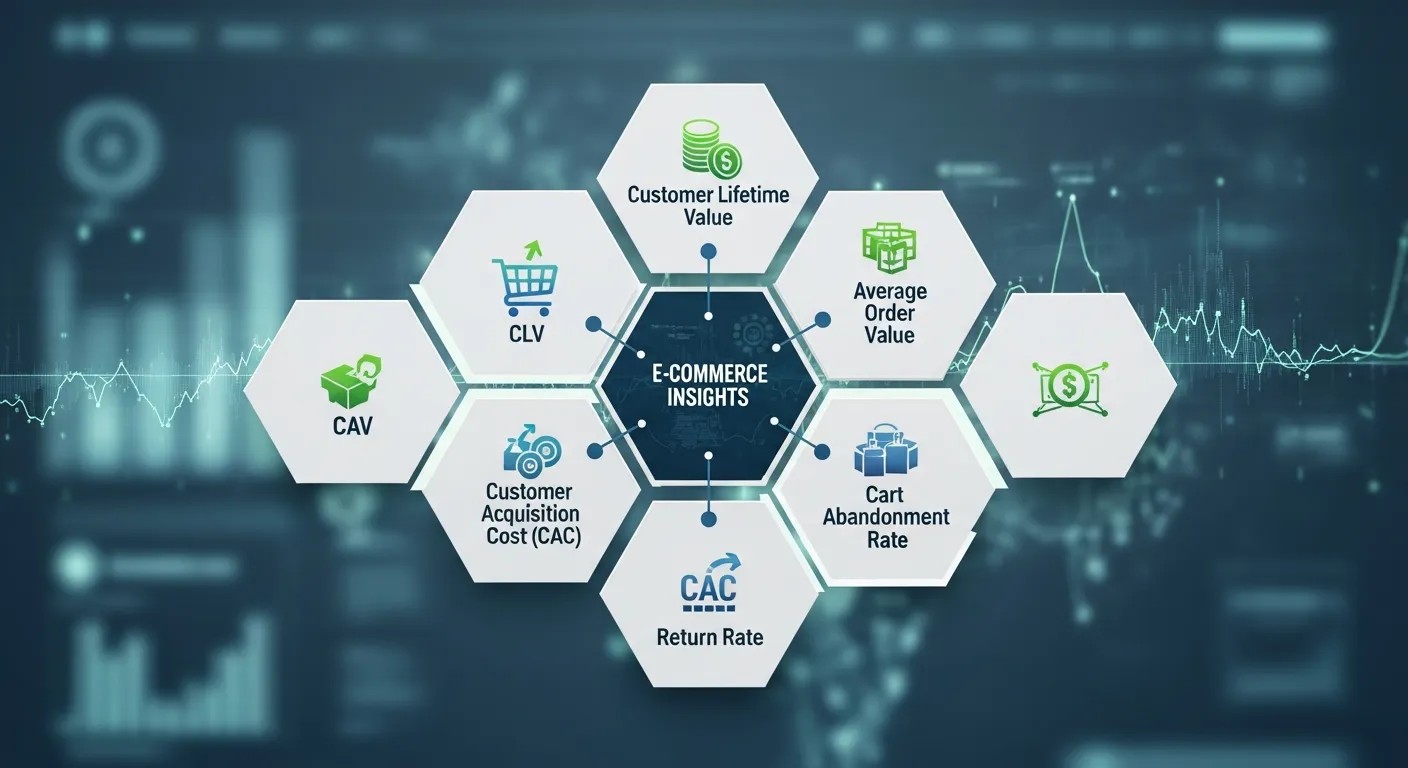
Ecommerce Behavior Insights Tracking should focus on metrics that move business outcomes. Conversion rate matters, but only when you know where the funnel weakens. Product view-to-cart ratio matters because it shows whether the listing is persuasive. Checkout abandonment matters because it often points to friction, cost shock, or trust issues. Repeat purchase rate matters because it shows whether the first sale created a durable customer relationship.
Ecommerce Behavior Insights Tracking also benefits from segmentation. A metric that looks healthy across the whole store may hide weak performance on mobile, in a specific country, or on a certain product line. The toolkit should let the team break performance into useful slices so the real issue is visible. Broad averages are convenient, but they are not always actionable.
Ecommerce Behavior Insights Tracking becomes even better when paired with operational reporting. That is where Ecommerce Channel ROAS Tracking Analytics fits naturally, because return on ad spend tells the team whether traffic is only moving attention or actually creating profitable demand. When behavior and ROAS are read together, the business gets a much sharper picture of both efficiency and intent.
Where the user journey breaks
Ecommerce Behavior Insights Tracking is most powerful at the point where shopping momentum weakens. Maybe the product page has too much clutter. Maybe shipping costs appear too late. Maybe the checkout form asks for too much too soon. Maybe trust signals are buried. When the team sees the actual drop-off point, fixes become less random and more confident.
Ecommerce Behavior Insights Tracking should also reveal the emotional state behind the click. People do not leave because of one technical metric; they leave because they feel uncertain, rushed, distracted, unconvinced, or disappointed. The toolkit helps the team infer that emotional pressure by showing where behavior slows, reverses, or stalls. That is why analysis should always include human interpretation.
Ecommerce Behavior Insights Tracking should be used to identify “almost buyers.” These are visitors who compare, wishlist, revisit, or partially check out but do not complete the action. Almost buyers are often more valuable than cold traffic because they already showed interest. The toolkit should make those segments visible so retargeting, email, and offer changes can be focused where they matter most.
Product pages and merchandising
Ecommerce Behavior Insights Tracking can make product pages much smarter. A product page should not just display information; it should answer doubts. When the toolkit shows high views but low cart adds, the page may need better images, stronger copy, clearer social proof, or simpler variant selection. When behavior is visible, merchandising becomes a process of removing friction rather than guessing at aesthetics.
Ecommerce Behavior Insights Tracking also helps with assortment decisions. If a specific style, bundle, or price point gets repeated interest but weak conversion, the team can test whether the issue is positioning, price, or relevance. If one category consistently converts better than another, the store can shift attention and budget toward the more promising range. That is how behavior data starts shaping catalog strategy.
Ecommerce Behavior Insights Tracking should be used to compare page types as well. Some pages need inspiration, others need technical detail, and others need reassurance. A customer browsing a premium item often wants depth, while a customer buying an everyday replacement may want speed and simplicity. The toolkit should help the business see which content style matches which kind of purchase intent.
Checkout and payment behavior
Ecommerce Behavior Insights Tracking becomes even more valuable at checkout, because this is where intention meets resistance. A shopper may be ready to buy, yet still abandon because the form is too long, the payment options are limited, or the shipping cost feels too high. The toolkit should show where the friction begins, not just where the sale was lost.
Ecommerce Behavior Insights Tracking should also look for device-specific patterns. A checkout that works well on desktop but loses users on mobile may need a design or UX adjustment rather than a pricing change. Similarly, if a payment method performs better in one region than another, the issue may be local trust or convenience, not product appeal. Behavioral insight helps the team avoid the wrong fix.
Ecommerce Behavior Insights Tracking can also reveal trust problems. Customers often hesitate when they cannot see return policy clarity, security cues, delivery timelines, or final pricing early enough. The toolkit should help the team identify these moments of uncertainty so trust-building elements can be placed more intelligently. A smoother checkout is often a more profitable checkout.
Segmentation and audience intent
Ecommerce Behavior Insights Tracking should never be one-size-fits-all because different audiences behave differently. New visitors need orientation, returning visitors need reminders, and loyal buyers need speed. A toolkit that ignores these differences will produce averages that look neat but hide the truth. Segmentation gives the team the ability to respond to actual behavior rather than generic assumptions.
Ecommerce Behavior Insights Tracking also helps distinguish between intent levels. Some users are just browsing. Some are comparing. Some are close to buying. Some are price-sensitive. Some are brand-led. The toolkit should help identify these differences through behavior clues such as visit frequency, product sequence, dwell time, and cart behavior. That information helps marketing and merchandising speak to the right stage of interest.
Ecommerce Behavior Insights Tracking works especially well when paired with lifecycle or retention analysis. The first purchase is only the beginning. Once the store understands which audiences return, which ones churn, and which ones buy more than once, it can refine offers and content around customer value instead of only acquisition volume.
Channel analysis and traffic quality

Ecommerce Behavior Insights Tracking is not complete unless traffic sources are judged by behavior quality, not only quantity. A campaign that brings many visitors but few engaged sessions may still look successful in a surface report while failing to create real demand. The toolkit should show whether traffic from paid, organic, social, affiliate, or email behaves differently after landing.
Ecommerce Behavior Insights Tracking becomes especially practical when the business compares source behavior with profitability. That is where Best B2B Marketing Tools can help teams manage and qualify demand more efficiently, particularly when buyers move through longer consideration cycles and multiple touchpoints. The point is not just to get traffic; it is to get traffic that behaves in a way that supports revenue.
Ecommerce Behavior Insights Tracking should also help the team distinguish curiosity from commitment. Some channels create lots of exploration, while others create high intent. Both can be useful, but they should not be measured with the same lens. If the toolkit can show the difference, the team can allocate budget more intelligently and avoid overpaying for shallow attention.
Audits and operating rhythm
Ecommerce Behavior Insights Tracking becomes much more effective when it is used in regular audits rather than in emergency meetings. A weekly or monthly review helps the team spot drift, compare changes, and adjust before a small issue becomes a major revenue loss. That rhythm is important because behavior patterns can shift quietly before the total numbers show damage.
Ecommerce Behavior Insights Tracking should also support structured reviews of the revenue path. Ecommerce Revenue First Audits Tracking Analytics is a useful mindset because it pushes the team to start with revenue outcomes and work backward through traffic, engagement, and conversion quality. That way the audit stays commercial instead of becoming a purely technical exercise.
Ecommerce Behavior Insights Tracking audits should ask simple but powerful questions. Did the homepage improve or weaken intent? Did the product page create more confidence? Did checkout friction increase? Did a campaign bring better buyers or just more visits? When the audit is built around questions like these, the toolkit becomes a decision engine rather than a reporting dashboard.
Content, messaging, and persuasion
Ecommerce Behavior Insights Tracking also helps the business improve words, not only layouts. Product descriptions, headers, trust badges, urgency cues, and comparison copy all influence behavior. If the toolkit shows where users pause or bounce, the team can test whether the problem is clarity, relevance, or credibility. Good messaging often performs better because it reduces cognitive load.
Ecommerce Behavior Insights Tracking should make content testing feel more scientific. One headline may outperform another because it matches the visitor’s intent more closely. One product description may create stronger conversion because it answers a hidden objection. The toolkit should make it easy to compare content variations and learn which language truly moves behavior.
Ecommerce Behavior Insights Tracking also supports customer education. When people do not understand the product, they hesitate. That means the toolkit should help the team identify where more explanation is needed, where a video might help, and where a shorter message is actually better. Persuasion is not always about saying more; it is often about saying the right thing sooner.
Tables and dashboards that help people think
Ecommerce Behavior Insights Tracking works best when the output is readable. Dashboards should not bury insight under decoration. Teams need a clear view of key numbers, trend lines, segment performance, and problem areas. The best toolkit is the one that makes the right question obvious, not the one that looks the most impressive in a meeting.
Ecommerce Behavior Insights Tracking usually benefits from a table like this:
| Funnel Stage | What to Observe | What It Might Mean |
|---|---|---|
| Landing | Bounce and engagement | Message match or traffic quality |
| Product View | Scroll, clicks, dwell time | Interest, confusion, or comparison |
| Cart | Add rate and exits | Price, trust, or incentive issue |
| Checkout | Form drop-off and payment choice | Friction or payment mismatch |
| Post-Purchase | Repeat visits and repurchase | Satisfaction and loyalty |
Ecommerce Behavior Insights Tracking becomes far more actionable when each stage tells a story. A team that can read the story can act faster. A team that only watches totals may keep making broad guesses. The value of the toolkit is not in the chart itself, but in the decisions it makes possible.
Shopper psychology and decision friction
Ecommerce Behavior Insights Tracking should always be read through human psychology. People hesitate when they feel uncertainty, information overload, complexity, or low trust. They also act when a page feels simple, relevant, and confident. The toolkit helps the team notice where those emotional shifts happen, even when no one says them out loud.
Ecommerce Behavior Insights Tracking often reveals that small friction points matter more than large structural ideas. A hidden fee, a confusing button, a weak image, or a slow load can change behavior dramatically. That is why optimization should focus on removing resistance step by step rather than expecting one big redesign to solve everything.
Ecommerce Behavior Insights Tracking is also about attention. People rarely read every word. They scan, compare, and decide quickly. The toolkit should help the business understand which page elements receive attention and which are ignored. Once attention patterns are visible, the team can place the most persuasive information where it is most likely to be seen.
Using the data with other systems
Ecommerce Behavior Insights Tracking should not live alone. It becomes much more useful when combined with campaign data, CRM signals, customer service patterns, and inventory awareness. If a product is consistently out of stock, behavior changes may be tied to availability rather than poor merchandising. Context keeps the team from misreading the numbers.
Ecommerce Behavior Insights Tracking also works better when paired with lifecycle communication. Email, SMS, remarketing, and on-site personalization all become more effective when they respond to actual behavior. That is where Digital Tools for Modern IMC matter, because the customer experience improves when messages across channels stay consistent and relevant.
Ecommerce Behavior Insights Tracking should support coordination across departments. Marketing needs to know what content attracts action. Merchandising needs to know what products get attention. Operations needs to know where abandonment happens. Leadership needs to know what changes are working. The toolkit becomes powerful when it helps all of those groups talk to each other with the same evidence.
Operational habits that make the toolkit work
Ecommerce Behavior Insights Tracking is only as good as the habit behind it. A business that checks the data regularly, documents decisions, and revisits the outcome will learn much faster than a business that looks at metrics only when something breaks. The best results come from steady review, not occasional panic.
Ecommerce Behavior Insights Tracking should also lead to one clear action after each review. If the data is not causing a decision, it is probably too broad or too vague. Good analytics practice is not about observing everything. It is about identifying the few changes that will make the customer journey better and then testing them carefully.
Ecommerce Behavior Insights Tracking should also stay close to the business goal. If the goal is profitable growth, then the toolkit must keep tying behavior to revenue. If the goal is retention, then repeat visits and repurchase should matter more. If the goal is premium positioning, then average order value and product mix become more important. The toolkit should follow the strategy, not distract from it.
Conclusion
Ecommerce Behavior Insights Tracking gives ecommerce teams the ability to see how shoppers really move through the store instead of guessing from final sales numbers alone. When the business understands what attracts attention, what creates hesitation, and what closes the sale, it can improve pages, offers, checkout flow, and campaign quality with much more confidence. The best toolkits connect behavior to business outcomes, which is why they should be used with ROAS data, revenue-first audits, and channel analysis rather than in isolation. In practice, this means fewer wasted decisions and a clearer path to growth. Ecommerce Behavior Insights Tracking helps teams replace assumptions with evidence, and that shift is what makes the difference between reactive optimization and steady, profitable improvement. It also makes reporting calmer, because the team can see cause and effect instead of only chasing noisy metrics week after week.
Frequently Asked Questions (FAQ)
1. What is Ecommerce Behavior Insights Tracking?
Ecommerce Behavior Insights Tracking is the process of observing how shoppers move through product discovery, consideration, cart, checkout, and return behavior so the business can make better decisions.
2. Why is it better than watching revenue alone?
Revenue shows the outcome, but behavior shows the reasons behind the outcome. That helps the team fix the real issue instead of guessing.
3. What metrics matter most?
Product views, add-to-cart rate, checkout drop-off, conversion rate, repeat visits, and repeat purchase behavior are usually among the most useful metrics.
4. How does traffic source fit in?
Traffic source matters because not all visitors behave the same way. Some channels bring curious visitors, while others bring ready-to-buy shoppers.
5. Why use audits?
Audits help the team compare behavior patterns over time and identify where the funnel is weakening before revenue drops too far.
6. Is this only for big stores?
No. Smaller stores often benefit even more because they can act quickly on the insights and improve the journey with less complexity.
7. How do dashboards help?
Dashboards make the important patterns easier to see so teams can focus on the right problem instead of drowning in raw numbers.
8. What role does messaging play?
Messaging can change behavior by reducing confusion, increasing trust, and making the offer easier to understand.
9. Why connect it with ROAS?
ROAS shows whether traffic is profitable, while behavior tracking shows whether that traffic is meaningful. Together, they give a more complete view.
10. What is the main benefit overall?
The main benefit is clarity. Ecommerce Behavior Insights Tracking helps teams understand what shoppers do, why they do it, and what to improve next.


