

Ecommerce Channel ROAS Tracking Analytics helps teams see which channels truly earn profit, reduce waste, and scale spend with clearer decisions instead of guesswork.
Ecommerce Channel ROAS Tracking Analytics matters because growth only becomes meaningful when revenue can be tied to the channel that created it. A store may attract traffic from search, social, email, creators, affiliates, and retargeting, but if the team cannot see which path actually pays back, scaling becomes dangerous. Good measurement turns activity into evidence and helps leaders move with more confidence.
Ecommerce Channel ROAS Tracking Analytics also changes the psychology of decision-making. Instead of reacting to top-line vanity numbers, teams can ask whether a channel is profitable, efficient, and worth expanding. That shift matters because people naturally chase visible activity, while the business needs visible contribution. When the report shows the real return, the team can stop arguing from opinion and start acting from proof.
Ecommerce Channel ROAS Tracking Analytics is most powerful when it is part of a broader system. The best teams do not treat ROAS as a single dashboard metric. They connect channel data to attribution, product margin, creative quality, audience fit, and the actual customer journey. That broader view helps avoid expensive mistakes and makes it easier to scale what genuinely works.
Why ROAS needs more than a number
Ecommerce Channel ROAS Tracking Analytics is not just a math exercise. It is a way to understand whether marketing is creating value after cost. A high ROAS on paper can still hide weak margin, bad retention, or poor customer quality. A lower ROAS can sometimes be acceptable if repeat orders and lifetime value are strong. The number only makes sense when the business context is visible.
Ecommerce Channel ROAS Tracking Analytics becomes much more useful when the team stops treating each channel as an isolated island. Search may close demand that social introduced. Email may recover buyers who first came through paid traffic. Retargeting may support the final conversion without creating new demand by itself. If the team misunderstands that relationship, it may cut a valuable channel too early or overfund one that only looks good at the end of the journey.
Ecommerce Channel ROAS Tracking Analytics also reduces emotional confusion. Teams often become attached to the channels they manage, especially when those channels feel creative or fast-moving. A clean ROAS view gives everyone a shared reference point. That is important because growth decisions become easier when the conversation is about profit contribution rather than personal preference.
Ecommerce Channel ROAS Tracking Analytics works best when the team accepts that not every return shows up immediately. Some channels influence awareness, some assist conversion, and some close the sale. The report needs to reflect that layered reality or it will reward the wrong behavior.
Build the tracking foundation first
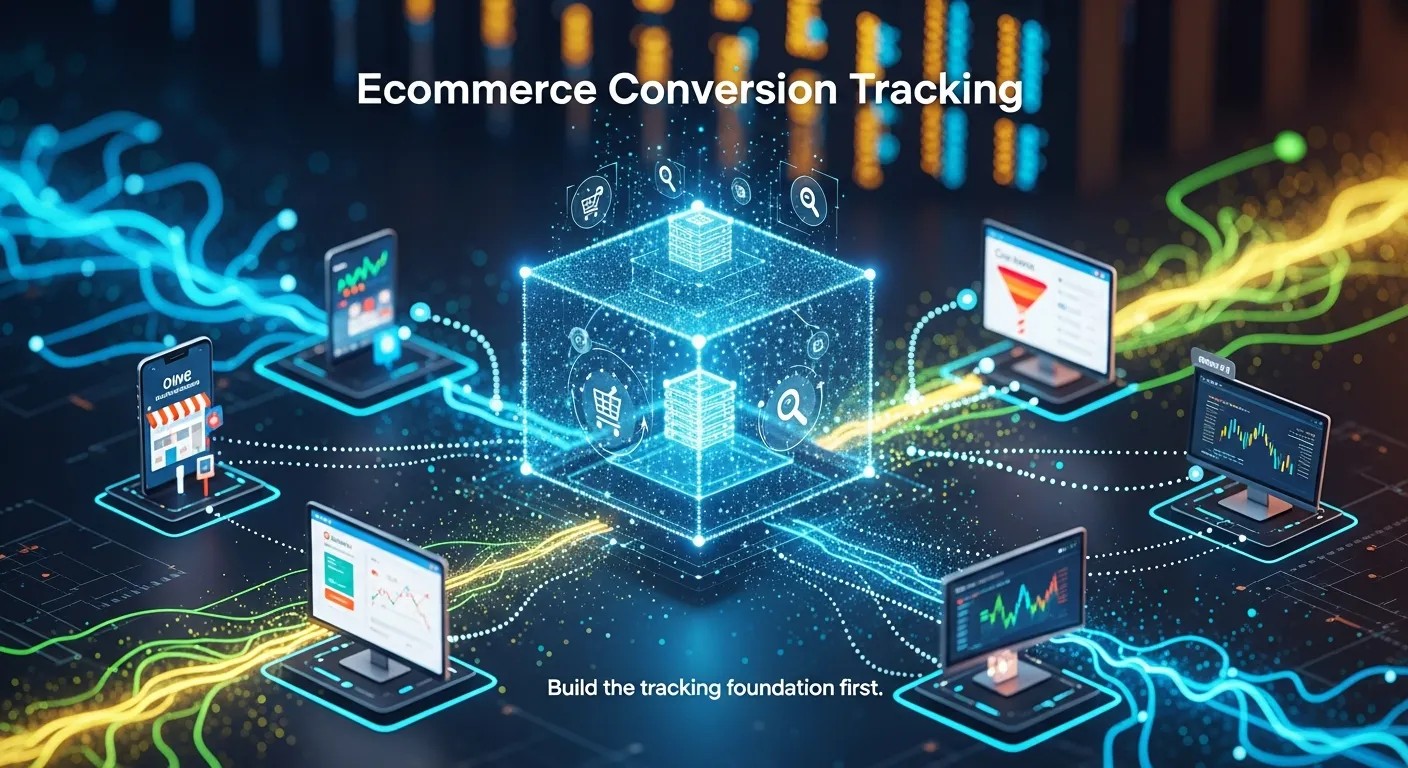
Ecommerce Channel ROAS Tracking Analytics depends on clean data. If the tracking is broken, the numbers will be broken too. That means purchases, revenue, channel tags, and attribution events should be set up carefully before the team begins making budget decisions. A channel cannot be judged fairly if the system does not track it correctly.
Ecommerce Channel ROAS Tracking Analytics should start with the source of truth. The business needs clear rules about what counts as a conversion, how refunds are handled, how returns are counted, and which revenue number is being used. Those details matter because small measurement differences can create big disagreements when spend starts to scale. The cleaner the rules, the easier it is to trust the outcome.
Ecommerce Channel ROAS Tracking Analytics also improves when teams validate their events regularly. A broken purchase event, duplicated tag, or missing UTM can distort the whole picture. That is why the foundation should be checked before growth decisions are made. It is better to pause and clean the data than to scale a channel based on false confidence.
Ecommerce Channel ROAS Tracking Analytics becomes more reliable when the team treats data hygiene as a recurring task rather than a one-time setup. The market changes, the site changes, and the campaigns change. The measurement system should stay in sync.
A simple data health table
| Area | What to verify | Why it matters |
|---|---|---|
| Purchase event | Fires correctly | Revenue is measured accurately |
| Channel tags | Consistent naming | Channel performance stays clean |
| Refund logic | Included or excluded intentionally | ROAS is not inflated |
| Attribution window | Matches buying cycle | Credit is assigned fairly |
| Currency and tax | Handled consistently | Revenue totals remain trustworthy |
Ecommerce Channel ROAS Tracking Analytics gets much stronger when the team can trust this layer completely. Without it, every later decision becomes less reliable.
Read each channel in context
Ecommerce Channel ROAS Tracking Analytics should never compare channels only by surface-level return. Search, social, email, affiliate, creator, and retargeting channels all behave differently. Some channels capture demand that already exists. Others create demand over time. Others assist the final purchase but rarely get full credit. A fair system looks at the role each channel plays in the full journey.
Ecommerce Channel ROAS Tracking Analytics becomes clearer when the team asks what job the channel is supposed to do. Search may be efficient because it catches intent. Social may be useful because it creates discovery and story. Email may be valuable because it converts warm audiences. Retargeting may be effective because it recovers abandoned interest. Each channel should be judged against its actual role, not against the role of another channel.
Ecommerce Channel ROAS Tracking Analytics also reveals that some channels become more valuable when paired with others. An ad may not close the sale alone, but it may support a sequence that does. That is why a channel should be evaluated as part of the system, not as a single isolated event.
Ecommerce Channel ROAS Tracking Analytics helps teams avoid the trap of pretending every channel should produce the same kind of return. In real ecommerce, channel efficiency and channel influence are not always the same thing.
Attribution makes the story fairer
Attribution Tracking Analytics is what helps teams see how the customer journey actually unfolds. A buyer may click an ad, read reviews, return through search, and then convert from email. If the last click gets all the credit, the earlier channels may look weaker than they really are. That can lead to bad cuts and bad confidence.
Ecommerce Channel ROAS Tracking Analytics becomes more honest when the team uses attribution to compare models rather than cling to one view. First-touch can show where demand started. Last-touch can show where conversion happened. Multi-touch can show influence across the path. None of those views is perfect alone, but together they create a more balanced picture.
Ecommerce Channel ROAS Tracking Analytics also helps separate discovery from closing. A social campaign may spark the first interest, while branded search closes the sale later. If the team only watches one endpoint, it may reward the wrong channel. Attribution is not a technical detail; it is the mechanism that keeps the business from misunderstanding its own growth.
Ecommerce Channel ROAS Tracking Analytics becomes much easier to explain when the team can show where the customer first entered, where the customer returned, and where the purchase finally happened. That narrative is usually more useful than one isolated number.
Audit revenue before you scale spend
Revenue First Audits Tracking Analytics is the right mindset when a business wants to scale without adding waste. If the store has product-page issues, checkout friction, weak margins, or low repeat purchase rates, higher spend may simply magnify the problem. Auditing revenue first helps the team fix leaks before feeding more traffic into them.
Ecommerce Channel ROAS Tracking Analytics works better when audits reveal what is hurting conversion beyond the ad platform. A channel may appear weak because the landing page is slow. Another may look strong because the customers are high value. Another may underperform because the offer is not clear enough. The audit should uncover those hidden factors so the ROAS view is not misleading.
Ecommerce Channel ROAS Tracking Analytics can also expose overreliance on discount behavior. If a channel only performs when the product is heavily discounted, the true return may be weaker than it looks. That is why the audit should include price sensitivity, margin structure, and post-purchase behavior. The point is not to chase the highest number on the dashboard. The point is to grow profitably.
Ecommerce Channel ROAS Tracking Analytics becomes a better planning tool when audits happen regularly. One review is useful. Repeated reviews create discipline. That rhythm helps the team catch problems early and scale the right campaigns with less fear.
Connect marketing to the rest of the business

Marketing Business Communication is what keeps ROAS from becoming a siloed metric. If marketing knows the business goal, the margin structure, the inventory limits, and the customer quality priorities, it can make better channel decisions. ROAS is not only a marketing number. It is a business coordination number.
Ecommerce Channel ROAS Tracking Analytics gets stronger when marketing, sales, operations, and finance are all looking at the same core story. Marketing may care about traffic and conversion. Finance may care about profit and payback. Operations may care about order quality and fulfillment pressure. A shared view helps these teams make decisions without pulling in different directions.
Ecommerce Channel ROAS Tracking Analytics also depends on the language used internally. If one team says “efficient” and another team says “profitable,” they may be talking past each other. Good communication makes sure the same metric means the same thing to everyone involved. That clarity is one of the fastest ways to improve decisions without changing the channels themselves.
Ecommerce Channel ROAS Tracking Analytics becomes a leadership tool when the discussion shifts from channel pride to business outcomes. That shift usually makes scaling faster because the team can align around the numbers that matter most.
Keep the message aligned across channels
Integrated Marketing Communications helps ROAS because channels work better when the message is consistent. If the ad promise, landing page, email sequence, and post-purchase flow all tell the same story, conversion friction drops. Customers feel more confident when the experience is coherent. That consistency also improves measurement because the team can see a clearer response to a unified message.
Ecommerce Channel ROAS Tracking Analytics becomes more meaningful when the same audience sees a connected journey instead of disconnected content. A strong integrated system improves recall, trust, and conversion momentum. If each channel says something different, the user has to work harder to understand the offer. Harder understanding usually means weaker returns.
Ecommerce Channel ROAS Tracking Analytics also improves when creative and offer logic are aligned across the funnel. A discount-heavy ad paired with a premium landing page can confuse the buyer. A consistent message across awareness, retargeting, and conversion stages usually performs better because it reduces uncertainty and keeps the buying path simple.
Ecommerce Channel ROAS Tracking Analytics is not just about numbers flowing in from channels. It is also about making sure the channels are telling one clear story. When that happens, the measured return is often more stable and more scalable.
Budget allocation should follow repeatable winners
Ecommerce Channel ROAS Tracking Analytics should guide spend toward channels that produce repeatable profit, not just temporary spikes. A channel can have one excellent week and still be unstable. The real question is whether the performance can be repeated at a larger scale. If the answer is yes, it may deserve more budget. If not, the team should be careful about overcommitting.
Ecommerce Channel ROAS Tracking Analytics also helps when the business is trying to decide where to cut. The temptation is to cut the most expensive channel first, but that is not always the smartest move. A channel with a high cost can still be valuable if it brings strong customers. The smarter approach is to look at contribution quality, not only spend size.
Ecommerce Channel ROAS Tracking Analytics becomes especially useful when the team creates budget rules. For example, a channel may need to hold a minimum ROAS for two cycles before scaling, or a channel may need to show retention value before getting more budget. Rules make decisions less emotional and more repeatable.
Ecommerce Channel ROAS Tracking Analytics should therefore act like a steering wheel, not a trophy. Its job is to guide money toward what actually works and away from what only looks impressive.
Common mistakes that distort the picture
Ecommerce Channel ROAS Tracking Analytics often fails when teams measure too early or too narrowly. If the attribution window is too short, some channels will look weaker than they really are. If refunds are ignored, some channels will look stronger than they should. If the team treats one model as absolute truth, the business may make expensive mistakes.
Ecommerce Channel ROAS Tracking Analytics also gets distorted when everyone wants their favorite channel to look good. That bias can show up in the way reports are framed, which metrics are highlighted, or which time periods are chosen. A strong measurement culture resists that pressure by making the rules visible and consistent.
Ecommerce Channel ROAS Tracking Analytics can also be hurt by overcomplication. Too many dashboards, too many definitions, and too many exceptions can make the team stop trusting the data altogether. Simplicity matters because people are more likely to act on a metric they understand quickly. A clean reporting system usually beats a clever one.
Ecommerce Channel ROAS Tracking Analytics is most effective when the team uses it to ask better questions, not to defend a favorite answer. That mindset keeps the data useful.
Use a practical comparison table
| Channel type | Main role | What to watch |
|---|---|---|
| Search | Capture intent | Query quality, conversion rate |
| Social | Create demand | Creative strength, audience fit |
| Recover and nurture | Open quality, repeat purchases | |
| Affiliate | Expand reach | Margin pressure, partner quality |
| Retargeting | Close warm users | Frequency, incremental lift |
This kind of table makes Ecommerce Channel ROAS Tracking Analytics more actionable because it reminds the team that channels are not identical. They do different jobs, and the reporting should respect those jobs.
Operating rhythm matters
Ecommerce Channel ROAS Tracking Analytics works best when the team reviews it on a schedule. Weekly reviews can catch fast changes. Monthly reviews can reveal trends. Quarterly reviews can connect the channel data to larger business goals such as margin, seasonality, and retention. A rhythm keeps the system alive instead of treating reporting like a one-time event.
Ecommerce Channel ROAS Tracking Analytics should also lead to action. If the data says a channel is slowing down, the team should know what happens next. If the data says one channel is outperforming, the team should know how to test scale. Reporting without action is just observation. Reporting with action is a growth system.
Ecommerce Channel ROAS Tracking Analytics becomes more powerful when the organization knows what it will do with the answer before the report arrives. That way, the data supports decisions instead of creating more confusion.
A simple optimization table
| Signal | Possible meaning | Likely action |
|---|---|---|
| High ROAS, low volume | Channel can scale carefully | Increase budget gradually |
| Low ROAS, strong assists | Channel may support discovery | Reevaluate attribution |
| High clicks, poor conversion | Message or landing page issue | Test creative or offer |
| Strong revenue, weak retention | Good acquisition, weak fit | Review audience quality |
| Stable ROAS, rising spend | Scaling may be working | Keep testing incrementally |
Ecommerce Channel ROAS Tracking Analytics becomes easier to operate when the team links signals to actions. That connection turns measurement into momentum.
Build trust in the number

Ecommerce Channel ROAS Tracking Analytics only helps when the team believes the data. Trust comes from consistency, transparency, and repeated validation. If the same system is used across channels and across time, people become more willing to act on what it shows. That trust is one of the biggest growth assets an ecommerce team can build.
Ecommerce Channel ROAS Tracking Analytics also builds trust externally when leadership can explain why a channel is being scaled or reduced. Clear logic makes internal decisions feel less arbitrary. That matters because teams move faster when they understand the reasoning behind the decision.
Ecommerce Channel ROAS Tracking Analytics should therefore be treated as a shared language for growth. When everyone understands how the metric works and what it means, the business can move with more clarity and less friction.
Final perspective before the close
Ecommerce Channel ROAS Tracking Analytics is strongest when it is connected to the full business, not just the ad dashboard. If the team understands attribution, audits revenue before scaling, communicates clearly across departments, and keeps the message aligned, the ROAS number becomes much more useful. The goal is not to chase the biggest visible return in isolation. The goal is to find the channels that create real profit, repeatable growth, and a cleaner path to scale. When the system is built this way, the business can spend with more confidence and make decisions that hold up over time.
Conclusion
Strong ecommerce growth depends on more than traffic and more than intuition. It depends on seeing which channels truly contribute to profit, which ones assist the journey, and which ones need to be adjusted or cut. When the data foundation is clean, the attribution logic is fair, the revenue audits are honest, and the messaging is aligned across the funnel, ROAS becomes a reliable guide instead of a noisy dashboard. That clarity helps teams allocate budget with more confidence, improve weak points faster, and scale the channels that actually deserve more investment. In the long run, that is how ecommerce businesses grow without wasting money.
Frequently Asked Questions (FAQ)
1. What is Ecommerce Channel ROAS Tracking Analytics?
Ecommerce Channel ROAS Tracking Analytics is the process of measuring how much revenue each marketing channel produces relative to the cost of that channel. It helps teams understand which channels are truly profitable and which ones need adjustment.
2. Why is ROAS not enough by itself?
ROAS alone can hide margin issues, retention problems, or attribution errors. It is most useful when it is viewed alongside profit, customer quality, and the full buying journey.
3. What is the first thing to fix?
The first thing to fix is the tracking foundation. If purchase events, tags, or revenue logic are wrong, the rest of the analysis will be misleading.
4. How does attribution affect ROAS?
Attribution changes which channel gets credit for the sale. If the model is too narrow, some channels may look weaker than they actually are.
5. What should teams audit before scaling?
Teams should audit product-page quality, checkout flow, refund behavior, margin structure, and traffic quality before increasing spend.
6. Why does message consistency matter?
When the message is consistent across ads, pages, and emails, users understand the offer more easily and conversion usually becomes smoother.
7. How often should ROAS be reviewed?
Weekly reviews are useful for quick changes, monthly reviews help with trends, and quarterly reviews connect ROAS to broader business goals.
8. What is the biggest measurement mistake?
The biggest mistake is treating one channel or one attribution view as absolute truth instead of using the full picture.
9. Should every channel be judged the same way?
No. Different channels do different jobs. Some create demand, some capture intent, and some close the sale.
10. What is the main goal of tracking ROAS well?
The main goal is to help the business spend money where it creates repeatable profit and remove waste from channels that do not.


